1225 and the following centuries
The First Word Lists
The book traces English lexicography back to Latin word lists, including a Dictionarius published in 1225. For centuries, however, readers of English had no comprehensive English-language dictionary to consult.
Late sixteenth and early seventeenth centuries
Shakespeare Without a Dictionary
When [William Shakespeare](entity:character-recall-character-william-shakespeare-17f910325d61) wrote, he had no full English dictionary to check spelling, meaning, or usage. Earlier reference books could help with rhetoric or classical allusions, but they did not offer a complete inventory of English.
1604
Cawdrey’s English Dictionary
[Robert Cawdrey](entity:character-recall-character-robert-cawdrey-50dd19be8d1e) published [A Table Alphabeticall](entity:object-recall-object-fa69dea83b08), a small collection of roughly 2,500 difficult or unusual English words. Intended to help readers understand unfamiliar vocabulary, it is presented as the first true monolingual English dictionary.
Seventeenth century
The Age of Hard Words
English dictionaries multiplied, but many concentrated on obscure, learned, or showy words rather than ordinary speech. Their definitions were often thin or eccentric, and the language as a whole remained unrecorded.
1721
Bailey’s Wider Lexicon
[Nathaniel Bailey](entity:character-recall-character-nathaniel-bailey-c55411a27068) produced a widely successful dictionary that reached beyond hard words to include a much broader range of English. Its ambitious title promised etymology, technical vocabulary, legal phrases, dialects, and names, yet the entire language still eluded its compilers.
1746
Johnson Takes the Commission
A group of [London](entity:location-recall-location-london-420923d4a60a) booksellers commissioned [Samuel Johnson](entity:character-recall-character-samuel-johnson-c88828a57323) to make a new dictionary, offering him a substantial fee. Johnson accepted, intending to build the work by reading English literature and collecting examples of words in use.
1755
Johnson’s Dictionary Appears
After years of reading, extracting quotations, and writing definitions, [Samuel Johnson](entity:character-recall-character-samuel-johnson-c88828a57323) published his Dictionary in two volumes. Its scale, literary examples, and finely differentiated meanings made it the standard English reference work for a century.
June 1834
Minor’s Birth in Ceylon
[William Chester Minor](entity:character-recall-character-william-chester-min-876b3fff1ddb) was born in [Ceylon](entity:location-recall-location-ceylon-42512ecf2447) to Eastman and Lucy Minor, American missionaries. He grew up amid the family’s religious life and the island’s languages, places, and customs, an upbringing that later fed both his scholarship and his memories.
February 1837 onward
Murray’s Hawick Childhood
[James Murray](entity:character-recall-character-james-murray-fc47da1af149) was born in [Hawick](entity:location-recall-location-hawick-72149ac451b8), Scotland, the son of a tailor and linen-draper. He left school at fourteen, but pursued learning voraciously, studying languages, natural history, and the past on his own.
1848
A Boy Sent Away
After the death of his mother and his father’s departure to seek a second wife, [William Chester Minor](entity:character-recall-character-william-chester-min-876b3fff1ddb) was sent from [Ceylon](entity:location-recall-location-ceylon-42512ecf2447) to live with an uncle in [New Haven](entity:location-recall-location-new-haven-7c77942e74f4). The voyage and his separation from home became formative memories in a life increasingly shaped by sexual guilt and religious anxiety.
Late 1840s to 1863
Minor Studies Medicine
In [New Haven](entity:location-recall-location-new-haven-7c77942e74f4), [William Chester Minor](entity:character-recall-character-william-chester-min-876b3fff1ddb) studied medicine at [Yale](entity:organization-recall-organization-c7e83f9fc73d) and developed a specialty in comparative anatomy. He graduated in 1863 after years of diligent work, with no clear public sign yet of the illness that would later overtake him.
1861 to 1865
Murray’s First Marriage
[James Murray](entity:character-recall-character-james-murray-fc47da1af149) married Maggie Scott, and the couple had a daughter, Anna, who died in infancy. Maggie then fell gravely ill with consumption; unable to afford the recommended treatment abroad, the couple moved to [London](entity:location-recall-location-london-420923d4a60a), where Murray became a bank clerk.
June 1863
Minor Enters the Union Army
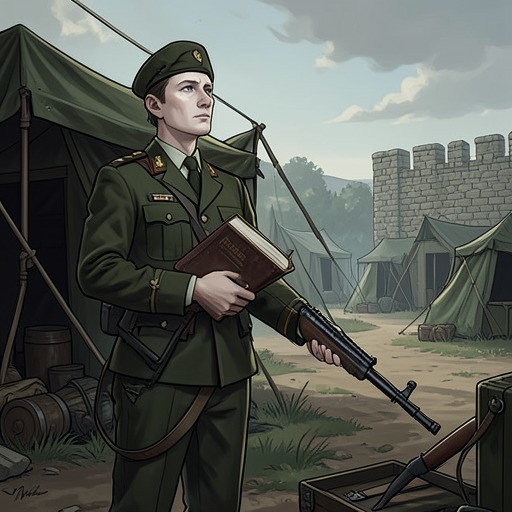
After graduating from [Yale](entity:organization-recall-organization-c7e83f9fc73d), [William Chester Minor](entity:character-recall-character-william-chester-min-876b3fff1ddb) joined the [Union Army](entity:organization-recall-organization-union-army-4e00e97512fa) as a surgeon during the [U.S. Civil War](entity:event-recall-event-6c1cd2647518). He was eager for active service, and in 1864 was sent from the relative safety of [New Haven](entity:location-recall-location-new-haven-7c77942e74f4) toward the fighting in [Virginia](entity:location-recall-location-virginia-3350de451826).
May 1864
The Battle of the Wilderness
[William Chester Minor](entity:character-recall-character-william-chester-min-876b3fff1ddb) encountered the [Battle of the Wilderness](entity:event-recall-event-bfd4220d53ef), where dense woods, smoke, and fire turned the fighting into a scene of extraordinary horror. The experience is presented as a possible contributor to the onset of his later illness, though the book does not claim a certain cause.
May 1864
The Branding of a Deserter
During the aftermath of the battle, a court-martial ordered an Irish deserter branded, and the young surgeon was directed to carry out the punishment. [William Chester Minor](entity:character-recall-character-william-chester-min-876b3fff1ddb) pressed the hot iron to the man’s face, an act the narrative links to his later fear of Irishmen and his delusions of persecution.
1865 to 1866
Minor’s Army Promotion
[William Chester Minor](entity:character-recall-character-william-chester-min-876b3fff1ddb) continued to work in military hospitals and earned a regular commission as an assistant surgeon. His ability and diligence won praise from colleagues, even as his later conduct would reveal increasingly troubling changes.
Summer 1866
The Cholera Epidemic
At [Governors Island](entity:location-recall-location-governors-island-39f348129b85), [William Chester Minor](entity:character-recall-character-william-chester-min-876b3fff1ddb) worked through a cholera epidemic that filled the hospitals and killed many people. His service brought recognition and a brevet promotion, while the account also notes that he began carrying a gun out of fear of street attackers.
1866 to 1867
New York’s Tenderloin
[William Chester Minor](entity:character-recall-character-william-chester-min-876b3fff1ddb) began frequenting bars and brothels in [New York City](entity:location-recall-location-new-york-city-65df0a129d4c) and developed a pattern of sexual excess and venereal illness. An engagement to a young woman ended after her mother rejected him, and his army superiors responded by transferring him away from the city.
1867 to 1868
Minor at Fort Barrancas
At [Fort Barrancas](entity:location-recall-location-fort-barrancas-2fd4bf229a0a), [William Chester Minor](entity:character-recall-character-william-chester-min-876b3fff1ddb) grew resentful of his isolation and suspicious of fellow officers. He challenged a friend to a duel and became convinced that others were plotting against him, while colleagues struggled to understand the change.
1868
The First Asylum Admission
Army physicians judged [William Chester Minor](entity:character-recall-character-william-chester-min-876b3fff1ddb) to be delusional and eventually both suicidal and homicidal. He entered the [Government Hospital for the Insane](entity:location-recall-location-government-hospital-ab169443c725) in Washington, where he remained for about eighteen months, still suffering from persecutory fears.
1865 to 1873
Murray Returns to Scholarship
After Maggie’s death, [James Murray](entity:character-recall-character-james-murray-fc47da1af149) married Ada Ruthven and resumed teaching and scholarly work. His studies brought him into the Philological Society and to the attention of [Frederick Furnivall](entity:character-recall-character-frederick-furnivall-ba5a5994b42b), whose sponsorship would help direct Murray toward the great dictionary project.
1869
Murray Joins the Philological Society
[James Murray](entity:character-recall-character-james-murray-fc47da1af149) became a member of the Philological Society, despite having left school at fourteen and never attended university. His publications on Scottish dialect and his growing reputation established him as a serious scholar.
1869 to 1871
Minor’s Retirement from the Army
After further examinations found [William Chester Minor](entity:character-recall-character-william-chester-min-876b3fff1ddb) unfit for duty, the army retired him on the grounds that his incapacity arose in the line of duty. He retained his pension and briefly returned to [New Haven](entity:location-recall-location-new-haven-7c77942e74f4), where family and old associates hoped he might recover.
5 November 1857
Trench’s Dictionary Lecture
At the [London Library](entity:location-recall-location-london-library-ade409bb7e19) on Guy Fawkes’ Day, [Richard Chenevix Trench](entity:character-recall-character-richard-chenevix-tr-c6b8a1205d39) argued that English dictionaries were deficient. He proposed that a dictionary should record the language rather than dictate which words were proper, and that quotations should document each word’s history.
January 1858
The New Dictionary Project
The Philological Society adopted a plan for a new historical English dictionary and began organizing readers to collect quotations. The project depended on a large volunteer effort, an unprecedentedly collaborative approach to documenting the language.
1858 to 1861
Coleridge’s Pigeonholes
[Herbert Coleridge](entity:character-recall-character-herbert-coleridge-61839cf01bd6) became the first editor and designed pigeonholes to hold the expected quotation slips, imagining that the first volume could appear within two years. He died in 1861 before completing even the letter A, exposing how badly the project’s scale had been underestimated.
1861 to the 1870s
Furnivall’s Stalled Enterprise
[Frederick Furnivall](entity:character-recall-character-frederick-furnivall-ba5a5994b42b) took over the dictionary effort and created a system for checking and sorting contributors’ slips. Yet volunteers gradually lost heart, books and papers were returned in quantity, and the project appeared close to collapse.
October 1871
Minor Leaves for Europe
After spending a summer and autumn in [New Haven](entity:location-recall-location-new-haven-7c77942e74f4), [William Chester Minor](entity:character-recall-character-william-chester-min-876b3fff1ddb) sailed to [London](entity:location-recall-location-london-420923d4a60a), intending to travel, paint, and rest. He carried his books and art materials, but also his revolver, while hoping that distance might quiet his troubled mind.
17 February 1872
The Lambeth Murder
In the early hours, [William Chester Minor](entity:character-recall-character-william-chester-min-876b3fff1ddb) pursued an imagined intruder into the streets near [Lambeth Marsh](entity:location-recall-location-lambeth-marsh-02828569954b). He fired repeatedly at [George Merrett](entity:character-recall-character-george-merrett-78a5a5716050), a brewery stoker on his way to work, and killed him on [Belvedere Road](entity:location-recall-location-belvedere-road-e686ff6f2f5a).
February 1872
Merrett’s Funeral
[George Merrett](entity:character-recall-character-george-merrett-78a5a5716050)’s death left [Eliza Merrett](entity:character-recall-character-eliza-merrett-09d25ab7cd73) pregnant and responsible for six children already living in poverty. Friendly societies, clergy, brewery workers, and members of the public raised help, and a great funeral procession carried him to [Tooting Cemetery](entity:location-recall-location-tooting-cemetery-2cdd2875cd37).
17 February 1872
Minor’s Arrest
A police constable arrested [William Chester Minor](entity:character-recall-character-william-chester-min-876b3fff1ddb) at the scene, where he calmly admitted firing the shots. He claimed that he had mistaken [George Merrett](entity:character-recall-character-george-merrett-78a5a5716050) for a man who had broken into his room, and the discovery that Minor was an American army surgeon turned the case into an international affair.
April 1872
The Insanity Acquittal
At trial, witnesses described [William Chester Minor](entity:character-recall-character-william-chester-min-876b3fff1ddb)’s longstanding delusions of intruders, poison, and persecution. The jury found him not guilty by reason of insanity under the [M'Naghten Rules](entity:rule-recall-rule-m-naghten-rules-46e81830dcc6), and the judge ordered him detained until the monarch’s pleasure was known.
17 April 1872
Arrival at Broadmoor
[William Chester Minor](entity:character-recall-character-william-chester-min-876b3fff1ddb) was transferred from prison to the newly established [Broadmoor Criminal Lunatic Asylum](entity:location-recall-location-broadmoor-criminal-l-c52108311053) in [Crowthorne](entity:location-recall-location-crowthorne-ce192b3fc69c). Officials placed the well-educated, apparently nonviolent patient in the more comfortable Block 2, where he was given two connected rooms.
1872 to the early 1880s
The Scholar’s Cell
With a pension and money from his family, [William Chester Minor](entity:character-recall-character-william-chester-min-876b3fff1ddb) filled his rooms with books, paints, and personal comforts. By day he could read, paint, and walk the grounds, but his nights remained dominated by delusions of unseen attackers and abuse.
Late 1870s to early 1880s
Merrett’s Widow Visits
Remorseful about the killing, [William Chester Minor](entity:character-recall-character-william-chester-min-876b3fff1ddb) wrote to [Eliza Merrett](entity:character-recall-character-eliza-merrett-09d25ab7cd73) and offered financial help. She accepted support and began visiting him at Broadmoor; for a time, she also brought him books from [London](entity:location-recall-location-london-420923d4a60a) dealers.
26 April 1878
Murray Takes the Dictionary
[Frederick Furnivall](entity:character-recall-character-frederick-furnivall-ba5a5994b42b) persuaded [James Murray](entity:character-recall-character-james-murray-fc47da1af149) to prepare sample entries and take on the stalled dictionary. After meeting the Delegates at [Christ Church, Oxford](entity:location-recall-location-christ-church-oxford-897267f93f32), Murray gained their support to proceed with the ambitious work.
1 March 1879
The Dictionary Contract
After a year of arguments about the terms, [James Murray](entity:character-recall-character-james-murray-fc47da1af149) formally agreed to edit the New English Dictionary for the Philological Society and [Oxford](entity:location-recall-location-oxford-6b47fed333f9). The projected four-volume, ten-year undertaking was another underestimate, but the work was now properly underway.
April 1879
Murray’s Public Appeal
[James Murray](entity:character-recall-character-james-murray-fc47da1af149) issued a public call for readers to examine books and send in quotations, seeking volunteers across Britain and its wider communities. His instructions described how to record a word, its source, and the sentence that showed its use.
Around 1880 or 1881
Minor Finds the Appeal
An appeal or journal notice reached [William Chester Minor](entity:character-recall-character-william-chester-min-876b3fff1ddb) in Broadmoor, likely through the books he collected. He wrote to [James Murray](entity:character-recall-character-james-murray-fc47da1af149) offering his services, eager for intellectual purpose and convinced that the dictionary’s method was sound.
Early 1880s
Minor Builds His Indexes
Rather than immediately sending quotations, [William Chester Minor](entity:character-recall-character-william-chester-min-876b3fff1ddb) read books closely and built meticulous, alphabetized word lists in small booklets. The method allowed him to retrieve a useful quotation whenever the editors later requested a particular word.
29 January 1884
The First OED Fascicle
The first fascicle of the New English Dictionary appeared, covering A to ant. [James Murray](entity:character-recall-character-james-murray-fc47da1af149) celebrated the visible beginning of the work and predicted completion in eleven years; in reality, decades remained.
Summer 1884
The Oxford Scriptorium
[James Murray](entity:character-recall-character-james-murray-fc47da1af149) and his family moved to [Oxford](entity:location-recall-location-oxford-6b47fed333f9), where he established a larger Scriptorium to handle the flood of slips. Assistants and family members sorted quotations by spelling, part of speech, chronology, and sense before Murray shaped the final entries.
1885
Minor’s First Requested Word
When the editors sought help with art, [William Chester Minor](entity:character-recall-character-william-chester-min-876b3fff1ddb) sent an unusually rich set of quotations, including an early example from Sir Joshua Reynolds. The response revealed how valuable his private indexes could be to the Dictionary team.
Mid-1880s onward
A Steady Stream of Quotations
[William Chester Minor](entity:character-recall-character-william-chester-min-876b3fff1ddb) began sending quotations for words the editors were actively preparing, often at a rate of scores or hundreds a week. His precise, targeted contributions made him one of the project’s most useful readers, even though the editors knew almost nothing about his circumstances.
Between 1887 and 1890
The Address Is Recognized
The librarian [Justin Winsor](entity:character-recall-character-justin-winsor-ee6f313ffeee) told [James Murray](entity:character-recall-character-james-murray-fc47da1af149) that his praise of “poor Dr Minor” had touched Americans, prompting Murray to learn that his correspondent lived in a lunatic asylum. Murray had never suspected the truth and chose to continue their correspondence without embarrassing Minor.
January 1891
Murray Meets Minor
After an American visitor said that [William Chester Minor](entity:character-recall-character-william-chester-min-876b3fff1ddb) knew Murray understood his situation, the editor wrote to Broadmoor’s superintendent and arranged a visit. Murray met Minor in his rooms, found him cultivated and composed, and began a personal friendship that grew alongside their scholarly partnership.
1891 through the following years
Walks Along the Terrace
[James Murray](entity:character-recall-character-james-murray-fc47da1af149) visited [William Chester Minor](entity:character-recall-character-william-chester-min-876b3fff1ddb) repeatedly, and the two men talked about words, books, dialects, and the Dictionary. They walked together on Broadmoor’s Terrace and shared tea in Minor’s room, while Murray also saw the persistent delusions that remained beneath his friend’s scholarly composure.
12 October 1897
The Dictionary Dinner
[Oxford](entity:location-recall-location-oxford-6b47fed333f9) held a grand dinner to honor [James Murray](entity:character-recall-character-james-murray-fc47da1af149) and celebrate the Dictionary’s progress, with editors, printers, scholars, and leading contributors invited. [William Chester Minor](entity:character-recall-character-william-chester-min-876b3fff1ddb) did not attend, giving rise to a romantic story that Murray first discovered his situation on a visit that the book later corrects.
1915 and later retellings
The False Meeting Legend
Journalist [Hayden Church](entity:character-recall-character-hayden-church-b3979b01d283) published a sensational account in which [James Murray](entity:character-recall-character-james-murray-fc47da1af149) supposedly arrived expecting to meet a country gentleman and instead discovered that [William Chester Minor](entity:character-recall-character-william-chester-min-876b3fff1ddb) was an asylum inmate. Henry Bradley challenged the romantic version, and Murray’s own later account established that he had learned the truth years before and met Minor in 1891.
1895 onward
Brayn Tightens the Regime
[Dr Brayn](entity:character-recall-character-dr-brayn-1261008ad967) replaced the more sympathetic [Dr Nicholson](entity:character-recall-character-dr-nicholson-ffaeb0aa60ce) and imposed a harsher discipline at Broadmoor. [William Chester Minor](entity:character-recall-character-william-chester-min-876b3fff1ddb) grew increasingly unhappy and less productive, though [James Murray](entity:character-recall-character-james-murray-fc47da1af149) continued to encourage him and recognized how much the Dictionary work mattered to him.
3 December 1902
Minor’s Self-Amputation
In a religious and delusional crisis, [William Chester Minor](entity:character-recall-character-william-chester-min-876b3fff1ddb) cut off his penis with a pocketknife, believing that his sexuality was sinful and that removing the organ would end his desires. He survived the operation, but the incident marked a devastating turn in his mental and physical decline.
1903 to 1910
A Campaign for His Return
As [William Chester Minor](entity:character-recall-character-william-chester-min-876b3fff1ddb) aged and weakened, his brother Alfred and [James Murray](entity:character-recall-character-james-murray-fc47da1af149) pressed for his return to the United States. [Dr Brayn](entity:character-recall-character-dr-brayn-1261008ad967)’s restrictions on Minor’s privileges intensified their concern, and the proposal gradually gained support from American officials.
6 April 1910
Churchill Signs the Discharge
[Winston Churchill](entity:character-recall-character-winston-churchill-02719856506e), then Home Secretary, approved [William Chester Minor](entity:character-recall-character-william-chester-min-876b3fff1ddb)’s conditional discharge after officials concluded that he could be transferred safely into his brother’s care. The order required Minor to leave Britain and not return.
16 April 1910
Minor Returns to America
After a final visit and farewell with [James Murray](entity:character-recall-character-james-murray-fc47da1af149), [William Chester Minor](entity:character-recall-character-william-chester-min-876b3fff1ddb) left Broadmoor under escort. His brother received him at Tilbury, and the two sailed aboard the [SS Minnetonka](entity:object-recall-object-ss-minnetonka-4bdf96fa6bd5) for New York, carrying the Dictionary volumes that had become central to Minor’s life.
July 1910 and July 1915
Furnivall and Murray Die
[Frederick Furnivall](entity:character-recall-character-frederick-furnivall-ba5a5994b42b) died shortly after Minor’s departure, still hoping to see the Dictionary completed. [James Murray](entity:character-recall-character-james-murray-fc47da1af149) continued working on the enormous letter T, but died in 1915 before the final work could be finished.
1910 to 1918
Minor at St Elizabeths
At [St Elizabeths Hospital](entity:location-recall-location-st-elizabeths-hospit-9fd77fe28bad) in Washington, [William Chester Minor](entity:character-recall-character-william-chester-min-876b3fff1ddb) remained delusional but was not considered dangerous enough to prevent supervised walks. His symptoms worsened, and in 1918 a physician described his condition as dementia praecox of the paranoid form.
1919 to 1920
Minor’s Final Years
[William Chester Minor](entity:character-recall-character-william-chester-min-876b3fff1ddb) was transferred to [The Retreat](entity:location-recall-location-the-retreat-271dc50aba2a) in Hartford, closer to his family, after decades in institutions. He liked the new surroundings but was growing blind and could no longer read; after developing bronchopneumonia, he died peacefully in March 1920.
1927 to 1928
The Dictionary Is Completed
The New English Dictionary was declared complete at the end of 1927 and issued in its twelve-volume form in 1928. The finished work contained more than 414,000 defined words and over 1.8 million quotations, with [William Chester Minor](entity:character-recall-character-william-chester-min-876b3fff1ddb) among its most significant contributors.
After the deaths of George and Eliza Merrett
Merrett’s Unmarked Grave
The book returns at its close to [George Merrett](entity:character-recall-character-george-merrett-78a5a5716050), whose grave had lost its marker, and to [Eliza Merrett](entity:character-recall-character-eliza-merrett-09d25ab7cd73), whose life never recovered from the murder and ended in liver failure. Their children suffered further tragedies, while [William Chester Minor](entity:character-recall-character-william-chester-min-876b3fff1ddb)’s grave, though modest, was at least preserved.
1933 to the late twentieth century
The OED’s Later Editions
A 1933 supplement restored words and evidence that had accumulated after the first edition, followed by further supplements and a computer-integrated second edition in 1989. Later digital versions expanded access, while the Dictionary continued to serve as the enduring record of the language and of the labor behind its making.
At the book’s ending
The Story’s Memorial
The narrative ends by insisting that the Dictionary’s memorial to [William Chester Minor](entity:character-recall-character-william-chester-min-876b3fff1ddb) cannot erase the murder that brought him to Broadmoor or the life it took from [George Merrett](entity:character-recall-character-george-merrett-78a5a5716050). Its final gesture dedicates the account to Merrett, the forgotten victim whose death altered the lives of everyone connected to the story.